Solution Category
Smart Home Control
Lighting, climate, shading, security, and scene control for modern homes
Project-based engagement
USDCustom
Scope, integration, and commissioning tailored to your site.
Smart Building Automation
Unify KNX integration, facility control, and building management on a secure automation platform. From intelligent lighting and HVAC to industrial process control, our solutions provide dependable monitoring, energy optimization, and scalable control for any property.
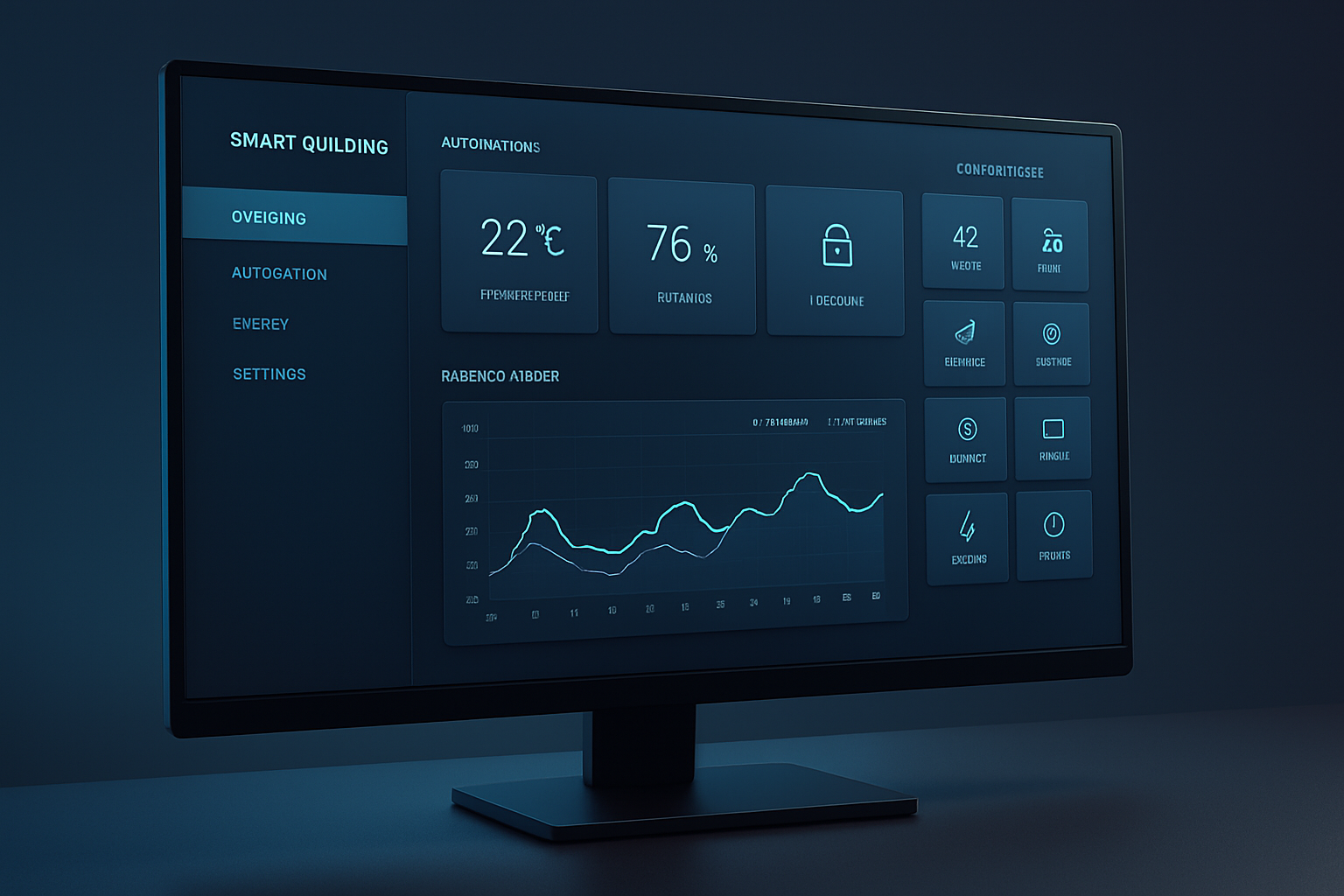
Real-time system health
24/7 monitoring & alerts
Solution coverage
New York Controls delivers a unified automation stack designed for residential, commercial, and industrial environments. Each solution is engineered for reliability, interoperability, and measurable efficiency gains.
Automation overview
New York Controls delivers reliable automation systems that unify smart homes, commercial buildings, and industrial environments. Our solutions are engineered for seamless integration across KNX, facility control, and industrial automation platforms, enabling consistent performance, precise monitoring, and intelligent orchestration of critical systems.
From lighting and climate to energy management and security, we tailor automation strategies to the needs of each project. Our approach prioritizes interoperability, ensuring that devices and subsystems work together reliably—whether you manage a single residence or a multi-site industrial operation.
With centralized dashboards, proactive alerts, and scalable architecture, customers gain better visibility, faster response times, and long-term operational efficiency. Every deployment is designed to be secure, resilient, and ready to evolve with future requirements.
Reliable integration
Stable connections across KNX, IoT, and industrial protocols for unified control and consistent performance.
Efficiency and monitoring
Real-time insights, automated routines, and energy-aware control that reduce operating costs.
Tailored solutions
Configured to match site requirements, operational priorities, and long-term scalability.
Solution Categories
Consultation-led, project-based delivery with clear scopes, technical guidance, and scalable outcomes.
Solution Category
Lighting, climate, shading, security, and scene control for modern homes
Project-based engagement
USDCustom
Scope, integration, and commissioning tailored to your site.
Solution Category
Integrated KNX-based automation for homes, offices, and smart buildings
Project-based engagement
USDCustom
Scope, integration, and commissioning tailored to your site.
Solution Category
Centralized monitoring and control for building systems and facility operations
Project-based engagement
USDCustom
Scope, integration, and commissioning tailored to your site.
Solution Category
Reliable control solutions for industrial processes, equipment, and operations
Project-based engagement
USDCustom
Scope, integration, and commissioning tailored to your site.
Control Brands & Usage Guide
Selecting a control brand is about matching the system to your environment, integration requirements, and long-term operations. The guide below provides a neutral overview of widely adopted brands and where they are typically deployed, so you can align technology choices with performance, scalability, and maintenance goals.
Project type and environment: Define whether the site is residential, commercial, industrial, or mission-critical. The operating conditions, safety requirements, and uptime expectations shape the most suitable platform.
Protocol compatibility: Verify support for KNX, BACnet, Modbus, OPC UA, or proprietary protocols currently deployed. Protocol alignment impacts device availability, integration scope, and commissioning tools.
Integration with existing infrastructure: Assess how the platform connects to legacy controllers, metering, BMS platforms, and HVAC equipment. Consider data exchange, alarm routing, and dashboard consistency.
Commissioning complexity: Review configuration workflows, licensing requirements, and tooling. Simpler commissioning can reduce startup time and lower the risk of post-handover issues.
Operator usability: Evaluate the clarity of dashboards, alarm workflows, and trend analysis tools. Operational teams need intuitive interfaces to manage daily performance and respond to alerts.
Lifecycle maintenance and spares: Consider availability of spare parts, long-term firmware support, and service coverage. Clear lifecycle planning helps minimize downtime across years of operation.
Scalability and future expansion: Plan for added zones, device counts, and multi-site rollouts. Platforms with open interfaces and broad device ecosystems reduce future rework.
Prioritize user-friendly mobile control, reliable lighting and shading scenes, and integration with security and climate systems. Look for stable device ecosystems and straightforward commissioning for installers.
Native KNX or gateway support for mixed vendor devices.
Intuitive scenes, schedules, and voice integration options.
Stable app experience and remote diagnostics.
Focus on multi-protocol integration, data visibility, and advanced scheduling. BMS environments benefit from robust alarm handling, trending, and centralized dashboards across sites.
Support for BACnet, Modbus, KNX, and OPC UA bridging.
Centralized alarm routing, user roles, and audit trails.
Scalable licensing and multi-site architecture.
HVAC-heavy facilities need precise control logic, robust sensor integration, and dependable uptime. Evaluate how well the brand supports complex sequences and serviceability.
Reliable PID control, trending, and alarm thresholds.
Clear commissioning tools for air handlers and chiller plants.
Service parts availability and vendor support coverage.
Industrial environments require resilient controllers, real-time performance, and compatibility with PLC ecosystems. Pay attention to safety practices, redundancy, and operational continuity.
Deterministic network performance and PLC integration.
Robust I/O compatibility and environmental tolerance.
Long-term lifecycle support and spare parts planning.
Open protocols enable multiple vendors to coexist in one ecosystem, which is common in multi-site and phased deployments. Interoperability helps avoid lock-in, supports future device additions, and allows operational teams to standardize monitoring and maintenance across different subsystems.
When platforms communicate through well-supported standards, integration can be cleaner and troubleshooting more predictable. This is especially important for facilities with mixed legacy and modern equipment, where consistent data exchange improves performance visibility.
“The best brand is the one that aligns with your system goals, integrates cleanly with existing infrastructure, and supports reliable operations over the full lifecycle.”
Applications & Usage Examples
New York Controls designs automation systems for diverse operational needs. Below are common environments and the control priorities that typically deliver measurable value. The right approach depends on operational goals, integration requirements, and long-term maintenance planning.
Residential automation focuses on comfort, safety, and energy efficiency while keeping control intuitive for occupants. Systems typically coordinate lighting, HVAC, and access through simple scenes and mobile control.
Commercial workspaces require efficient energy use, occupant comfort, and integrated security across floors. Automation coordinates schedules, monitoring, and shared system status for facility teams.
Guest experience and operational efficiency are key, with automation helping reduce energy waste and improve service. Control logic balances occupancy, comfort settings, and operational schedules.
Healthcare environments prioritize safety, reliability, and strict operational control across critical areas. Systems emphasize redundancy, alarm visibility, and accurate environmental control.
Retail automation balances energy savings with a consistent customer experience. Control schedules align with store hours while monitoring energy and equipment performance.
Industrial automation is centered on process reliability, safety compliance, and continuous monitoring. Control systems focus on synchronized operations and dependable alarm response.
Facilities combining residential, retail, and office areas require flexible integration and role-based control. Systems must balance shared infrastructure with tenant-level preferences.
Successful systems are designed around operational goals, integration constraints, and long-term support. Clear planning ensures control logic remains aligned with real-world workflows.
Automation design begins with project goals and the people who operate the building or process. Goals define what should be measured, while workflows determine how alerts, schedules, and overrides are handled day-to-day. Maintenance requirements influence how data is logged, how alarms escalate, and how easily systems can be updated without interrupting operations.
Project goals
Clarify performance targets, energy priorities, and control boundaries so the system delivers consistent outcomes.
User workflows
Map how staff interact with lighting, HVAC, access, and alarms to keep interfaces and permissions intuitive.
Maintenance needs
Plan service access, alert routing, and data retention so long-term support stays reliable and efficient.
Reference Library
These third-party references provide additional learning for utility control rooms, security system utility control, KNX controls, and programmable logic controllers. New York Controls shares them as neutral, educational materials for continued study.
Overview of utility control room environments and operator workspace design.
External guidance on security system utility control considerations.
Official KNX Controls portal for product and ecosystem information.
Neutral reference covering PLC fundamentals and usage in automation.
FAQ
Learn how New York Controls designs, integrates, and supports smart home, KNX, facility, and industrial automation projects.
We design end-to-end smart home controls for lighting, climate, shading, security, audio, and energy management. Each system is tailored to your space and can be fully app-controlled with secure local and remote access.
Yes. We provide certified KNX planning, programming, and commissioning for homes, offices, hotels, and industrial sites. Our approach ensures interoperability, long-term support, and compliance with international standards.
Absolutely. We connect to existing BMS, SCADA, PLC, and HVAC platforms using industry protocols and gateways. Our engineers map signals carefully to preserve uptime and improve operational visibility.
We build around your workflows. From multi-zone climate logic to advanced scene control, dashboards, and automated reporting, every layer is configurable to match your space, usage patterns, and security requirements.
We start with a needs assessment, then provide system architecture, device selection, and a clear implementation timeline. Installation, programming, testing, and training are handled by dedicated specialists.
Yes. We offer support plans, remote monitoring, and on-site service to keep systems secure and up to date. You also receive detailed documentation and a dedicated point of contact.